A performance marketing guide for small businesses in 2026
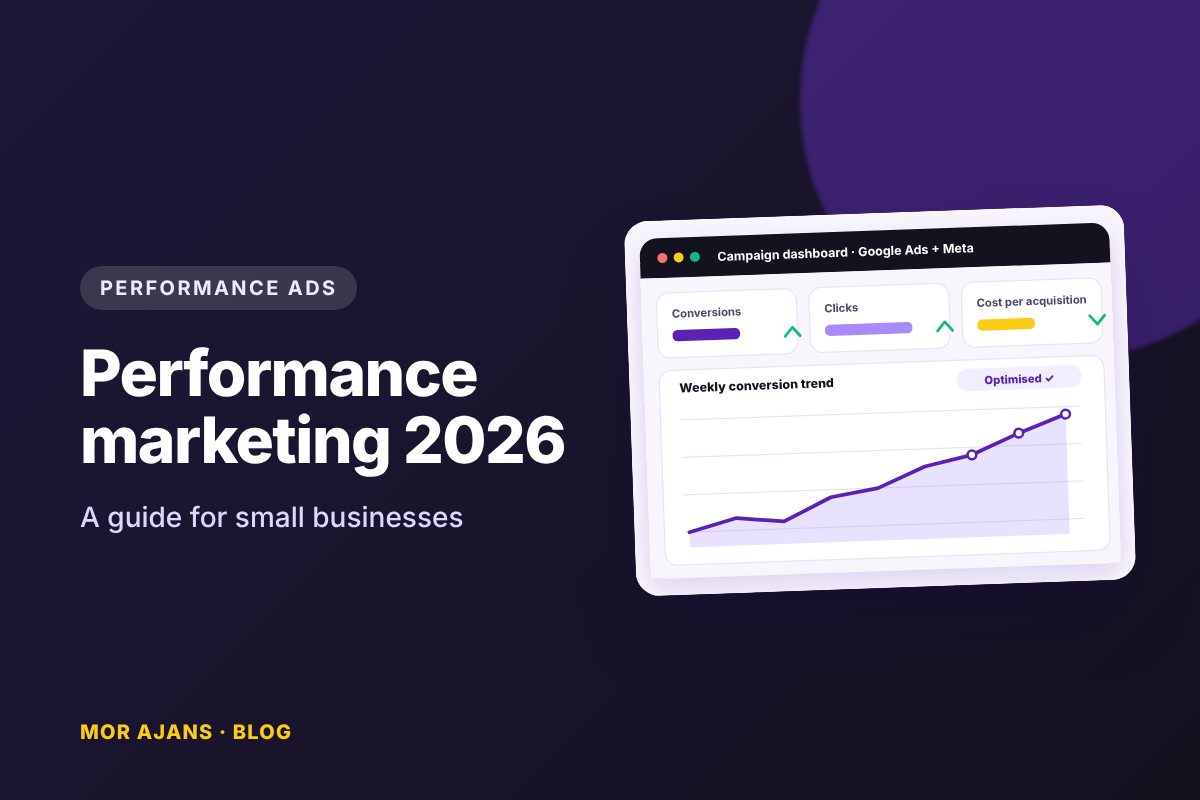
When your ad budget is small, every penny counts. The good news: unlike traditional media, digital advertising is measurable. You can see clearly how many customers each campaign brought in and how much each customer cost you. The bad news: platforms are designed to spend your budget, not to deliver results. Strategy is what closes that gap.
1. Goal first, channel second
"Let's run ads on Instagram" isn't a goal; it's a tool. The right order is this: how many new customers, quotes or sales do you want this month? What is the most a customer can cost you? Until these two numbers are set, no campaign can be judged a "success" or a "failure".
2. Google Ads or Meta?
- Google Ads (Search): People search when they have a need. For high-intent searches like "dental clinic in Şişli" or "corporate web design prices", it is the fastest conversion channel. If the demand already exists, start here.
- Meta (Instagram + Facebook): People don't search here; they discover. It suits visual products, lifestyle brands, local businesses and reaching audiences who "don't yet know they need you". It doesn't work without a good short video.
- TikTok: Low-cost reach, a young audience, heavy content consumption. It is valuable not for direct conversions but for building awareness and a retargeting pool.
On a small budget, rather than "trying out" two channels at once, put 70% of the budget into the channel with the clearest intent and 30% into a test channel.
3. The landing page is half the ad
Getting clicks is easy; getting conversions is hard. Don't send ad traffic to your homepage; send it to a landing page with a single offer and a single call to action: a WhatsApp button, a form or a phone call. If the page takes longer than 3 seconds to load on mobile, you're throwing part of your budget away from the start.
4. No optimisation without measurement
Before launching a campaign, the following should be in place: conversion events in GA4 (form, call, WhatsApp click), Google Ads and Meta conversion tracking, and UTM tags for every campaign. Without these, saying "the ads didn't work" means nothing; it just means you didn't measure.
5. A timeline for the first 30 days
- Week 1: Set up measurement, 2–3 ad groups and 3–4 different creatives. Keep the daily budget small.
- Week 2: Instead of fixing ads that get clicks but don't convert, fix the landing page that isn't converting.
- Weeks 3–4: Increase budgets by 20–30% on campaigns whose cost per customer is below your ceiling, and pause the rest. Start retargeting existing visitors.
Performance marketing isn't a "set it and forget it" job; it's a process that needs weekly maintenance. At Mor Ajans, we build your campaigns with this discipline and show you where your budget goes every month in a clear, easy-to-read report.
Free digital health check for your brand
We review your channels and map out concrete next steps.
Get in touch →