AI content production: Where does it work, and where doesn't it?
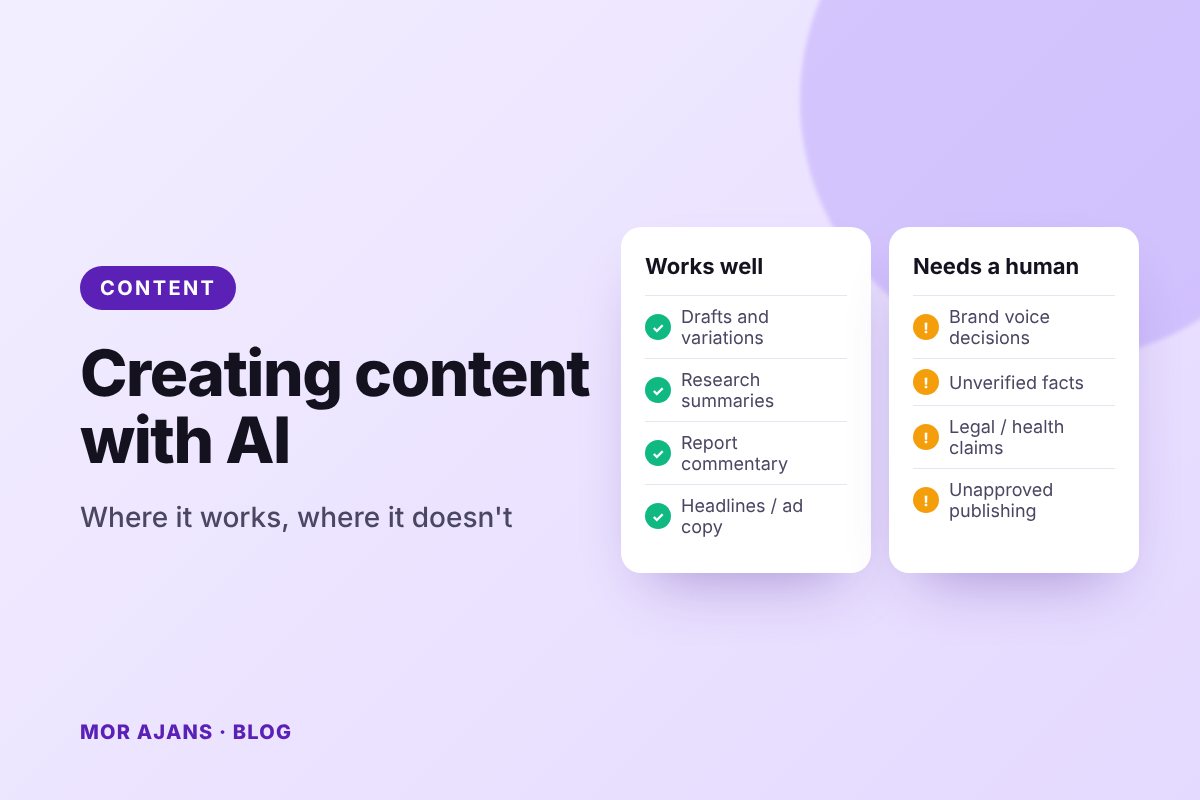
We have been actively using AI tools in our clients' content processes for a long time. The result shows that the claims at both extremes are wrong: AI is neither a "one-click agency" nor a "soulless text machine". Used in the right place, it multiplies production speed; used in the wrong place, it makes your brand sound like everyone else.
Where it works
- Content calendar and idea pool: Coming up with 20 post ideas for a month is now a half-hour job. A human still decides which ideas fit the brand.
- Generating variations: 10 different ad headlines and descriptions in 5 different lengths from a single approved message. Ideal for A/B testing.
- Turning long-form into short-form: A LinkedIn post from a blog article, Reels captions from a video script, an email summary from a press release.
- Visual drafts: Producing initial visuals to show a concept to the client. The final visual still usually comes from a designer.
- Interpreting data: Translating GA4 and ad reports into plain language and flagging unusual changes.
Where it doesn't work
- Brand voice: By default, these tools write in an "average internet" tone. Without a brand voice guide, the output sounds like everyone else's.
- Local and industry knowledge: On topics like prices, regulations and product details, it can be confidently wrong. Every figure and claim must be verified by a person.
- Community management: Auto-replying to comments is the quickest way to escalate a crisis.
- Originality: "Tips" content that everyone produces with the same tool no longer resonates with either algorithms or people.
Our rule: AI writes the first draft; a human writes the final version. No content goes to a client without being reviewed by a person.
A practical workflow
- Create a brand voice guide: one page covering tone, banned words and sample sentences. Give this guide to the tool every time you produce something.
- A human sets the monthly content themes; the tool generates post ideas and drafts from these themes.
- Drafts are edited, and concrete examples and brand-specific details are added.
- Visuals are produced with the tool at the concept stage and by a designer at the final stage.
- Performance data is summarised with the tool every month, and the next month's themes are updated accordingly.
The bottom line: AI isn't replacing the agency; it enables the agency to produce more, and more consistent, content with the same budget. The winners are those who get the process right, not the tool.
Free digital health check for your brand
We review your channels and map out concrete next steps.
Get in touch →